Brokenness, Expression, and Healing

Music and Healing, Poignant Songs, Uncategorized


“The worse childhood you have, the better artist you become.”

The renowned visual artist, Marina Abramovic, made this statement during an interview for CBS Sunday Morning some time ago. It made an immediate mark on me and rang painfully true. I don’t know much about the details of her childhood, but based on this statement and the little bit I do know, it doesn’t seem to have been a very good one. For her, the pain of her childhood is the fuel for her art.

I think she is onto something very important with the above statement. For me, the most compelling music is that which seems to be borne out of pain, struggle, or discontent. When I was younger, I was all about angry and/or rebellious music. It’s what drew me to Rage Against the Machine, Project 86 , and U2. During the past several years, as I have experienced some significant emotional healing, I started listening to sadder stuff. The Civil Wars were the door into sad music for me.

The anger, rebellion, and sorrow that drew me to these artists and those like them came from my own childhood. Like so many of us (I would argue all of us), I was deeply wounded as a child. I experienced deep rejection, abuse, and neglect. In the years leading up to my healing experience, my response to these wounds was anger and rebellion. This anger was not healthy. It was aggressive and controlling. As I began to see with some clarity that I had been wounded, the anger began to melt into sadness and grief. Now that I have experienced some significant healing, I find myself drawn simply to what feels like genuine emotion. That’s what I write about here. And, I write about it because the emotionality of music has helped me fully feel what I have needed to feel as I have been getting well.

The reason I can relate to emotive music is the genuine emotion so many artists pour out in their music. Without that, I would not be able to connect with their songs the way I do. Furthermore, the emotion they share likely comes from similar places as the emotion I feel when listening to them. When I listen to Sanctuary Hum by Project 86, for example, I get amped up and angry. This makes sense, as the song focuses on emotional, physical, and spiritual abuse in a church setting, specifically by a church leader. This resonates deeply with me, as I have experienced spiritual abuse myself. My own wounds have led me to want to protect others from being wounded. The song is an anthem, encouraging the abused person to stand up in the truth and to not let the abuser win. Even writing about that, in this moment, has me a little charged up. The emotion and context of the song beat at the same rhythm as my heart. And, the obvious connection here is that the emotion and context of that song came from the writer’s (Andrew Schwab) own experience.

Here’s the simple truth: we are all broken. We have all, whether or not we see it yet, been abused and/or neglected. We are all “damaged goods.” If we don’t own up to that, we are simply fooling ourselves. We all need healing.

I am convinced that a powerful avenue of that healing is self-expression. We are all built with innate significance. Each one of us was given a voice. Among the different ways you may use your voice, one of the most important ways is taking what is in you, the good, bad, and ugly, and getting it out there for others to see. Sometimes, that simply means you share the story of your wounds with a trusted friend or with a small group committed to your recovery and well-being, like what we experience at Wounded at Valleybrook Church. Sometimes, it means that you create something that expresses the emotional responses to the wounds that live in your soul. For me, that has come out in a variety of ways: writing, creating “identity presentations,” and sharing my story verbally. These expressions have been a central part of my healing process. They have helped me gain clarity about who I am, as well as who I am not. They have helped me create a dividing line between the parts of me that are genuinely me and the parts that I have taken on from my wounds and from my negative responses to those wounds. They have helped me grow closer to wholeness.

If I was wired differently, my self-expression would also come out in music. But, alas, I am not wired that way. So, I am thankful for musicians and songwriters who are wired that way and who share their souls through their music. And, I am thankful for the ones that are honest about their brokenness, their woundedness. For me, they are the ones that create the most meaningful art.
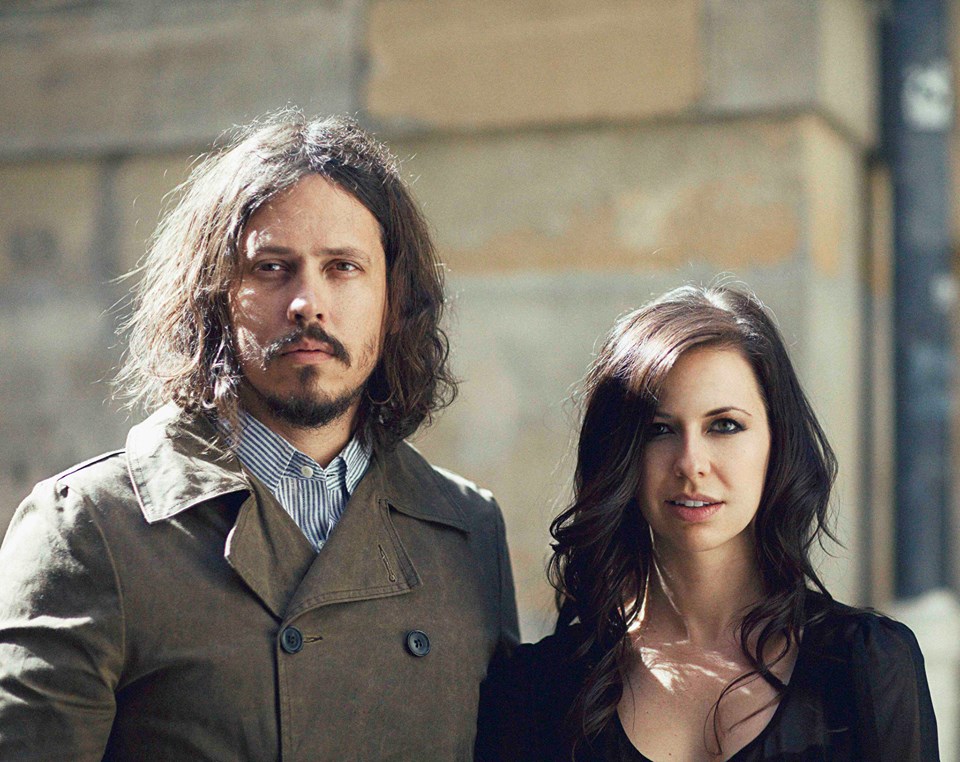


Anger, Grief, and The Civil Wars

Music and Healing, Poignant Songs

civil warsWhen I was growing up, heavy metal or hard rock was not okay in my house. It was the devil’s music. So, I never went near it until about 1986, when, in my youth group at church, I was introduced to Rez Band and Stryper, a couple of rock bands comprised by Christians. Rez (or The Resurrection Band) was gritty and raw, and I found that very appealing. And then there was Stryper, the opposite of gritty and raw, but still with a little edge (especially in light of the environment in which I grew up). These two bands were my introduction into harder music. As time went on, I gravitated more and more toward that stuff.

I think I was drawn to the intensity of harder music. One of the intense bands that I fell in love with was Project 86. What drew me into their music was that same rawness and grittiness I heard in Rez. But, I enjoyed P86 much more than Rez. They were honest about God, the church, and the dark stuff that happens in the church. And, they rocked hard. And, if I’m honest, there was some anger in their music and my heart resonated with that anger.

About three years ago, my hunger for angry music began to fade a bit. I remember when I first started listening to The Civil Wars around that time, and how their music was like a magnet for me and I couldn’t stop listening. The draw for me was the sorrow in so many of their songs. Those songs are sober, emotive, and heart-rending. One song in particular, “Falling,” grabbed a deep, firm hold of me during that time (more on that in a moment).

It is not coincidental that around that same time, in the fall of 2011, I participated in my first session of Wounded at Valleybrook Church. I mentioned something about this program in the ” The Song That Changed Everything” post. During that season, as I processed my own wounds, recognized their origins, and began to experience freedom, I learned about the dynamics of and relationship between anger and grief when it comes to the healing process.

For so many years, I was the angry young man who, sometimes boisterously and sometimes silently, was constantly bucking against the system, full of defiance. I began to see that my anger was not really about all the stuff I had been railing against. It was about my wounds. It was anger toward God and toward those who wounded me. As I processed through this truth, I was able to begin moving past being angry about my wounds and start feeling the sorrow for what I lost because of them. I was progressing from anger to grief.

So, it makes sense that I was more and more drawn to sad songs during that time. I was sad, and appropriately so. Much had been taken from me through the emotional wounds I had received in my childhood and young adult years.

And, during that season, I was also trying to figure out how to navigate life, especially in regard to my relationships with my wounders. In some of these relationships, I had lived in a lie for what felt like forever, believing things were good when they really were not. In fact, those relationships were dark, ugly, and harmful. But, I had been numb to those realities, and any time that I considered the possibility of something being wrong, I also numbed my emotions and found ways not to feel the anger and grief that were brimming under the surface.

This is why The Civil Wars’ “Falling” spoke to me on such a deep level. Consider the following lyrics:

Haven’t you seen me sleepwalking?
‘Cause I’ve been holding your hand
Haven’t you noticed me drifting?
Oh, let me tell you I am

Tell me it’s nothing
Try to convince me
That I’m not drowning
Oh let me tell you I am

Please, please tell me you know
I’ve got to let you go
I can’t help falling out of love with you

Why am I feeling so guilty?
Why am I holding my breath?
I’m worried ’bout everyone but me
And I just keep losing myself

Oh, won’t you read my mind
Don’t you let me lie here
And die here

http://www.youtube.com/watch?v=8qdk3iPFYxg

The main folks that wounded me in my formative years had always convinced me, through word and action, that the way they did things was the way things should be done. I grew up believing that what I experienced was not only normal, but that it was, in fact, good. As I began to break away from this fantasy and see things for what they really were, I could heartily relate to the feelings in this song….

I’ve been going through the motions, even though I know something is amiss…

You keep trying to convince me that everything is good, when I know that I’m drowning…

Won’t you reach out to me? Can’t you see I’m dying a slow, painful emotional death?

Oh, how I could relate to those verses, those thoughts, those emotions. I will forever be grateful that The Civil Wars wrote and recorded that song. It has played a role in my personal healing process simply by saying things that I needed to say, by expressing emotions that had laid dormant within me for years, for decades. Again, this is the power of music.

Thankfully, as I have continued to heal, I’m finding that angry music can still speak to me. It can help me feel things I need to feel. The same can still be said for sad songs. After all, I am very much in the midst of the healing process. And, I can also embrace happy songs, love songs, and songs that are emotive in a variety of ways, because I am beginning to fully feel all my emotions and embrace them as part of who God created me to be, as a fully-functional human being. But, getting to this point has not been easy, and I have had my hand held throughout by The Civil Wars, Project 86, and any number of other gifted musicians who bare their souls, challenge me, resonate with deeply felt emotions, and help me find my own voice.